
Home / Products / Treatment Systems
NSF/ANSI 245 · Nitrogen reductionNitrogen Reduction Systems
The Hydro-Action AN Series pairs a pretreatment tank with an aerobic treatment tank to strip total nitrogen before discharge. Five sizes from 400 to 1,100 gallons per day, for sites where a standard secondary system will not satisfy the permit.
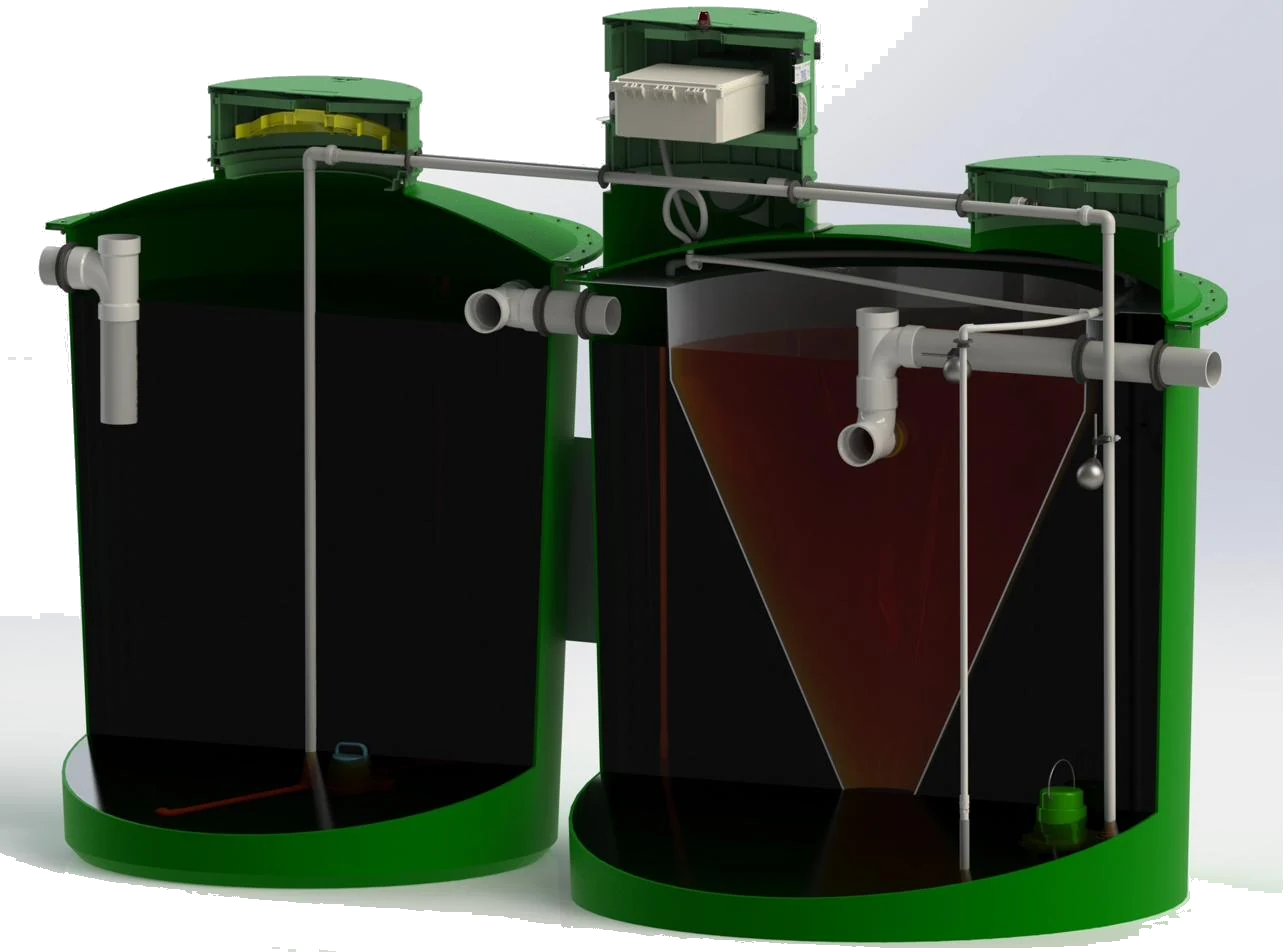
When secondary treatment isn’t enough
A standard aerobic unit certified to NSF/ANSI 40 reduces solids and organic load. It does not target nitrogen. Where groundwater feeds springs, estuaries or shellfish waters, nitrogen is the pollutant the permit is written around.
NSF/ANSI 245 is the certification for that job — a system tested and shown to remove at least half the total nitrogen entering it. In Florida, this is the standard behind ENR-OSTDS requirements in Basin Management Action Plan areas and nutrient-sensitive counties.
- Certified to NSF/ANSI 245 for total nitrogen reduction
- Meets NSF/ANSI 40 Class I secondary treatment as well
- Suited to BMAP areas, springs protection zones and coastal parcels
- Pairs with UV disinfection or chlorination where discharge requires it
How nitrogen comes out
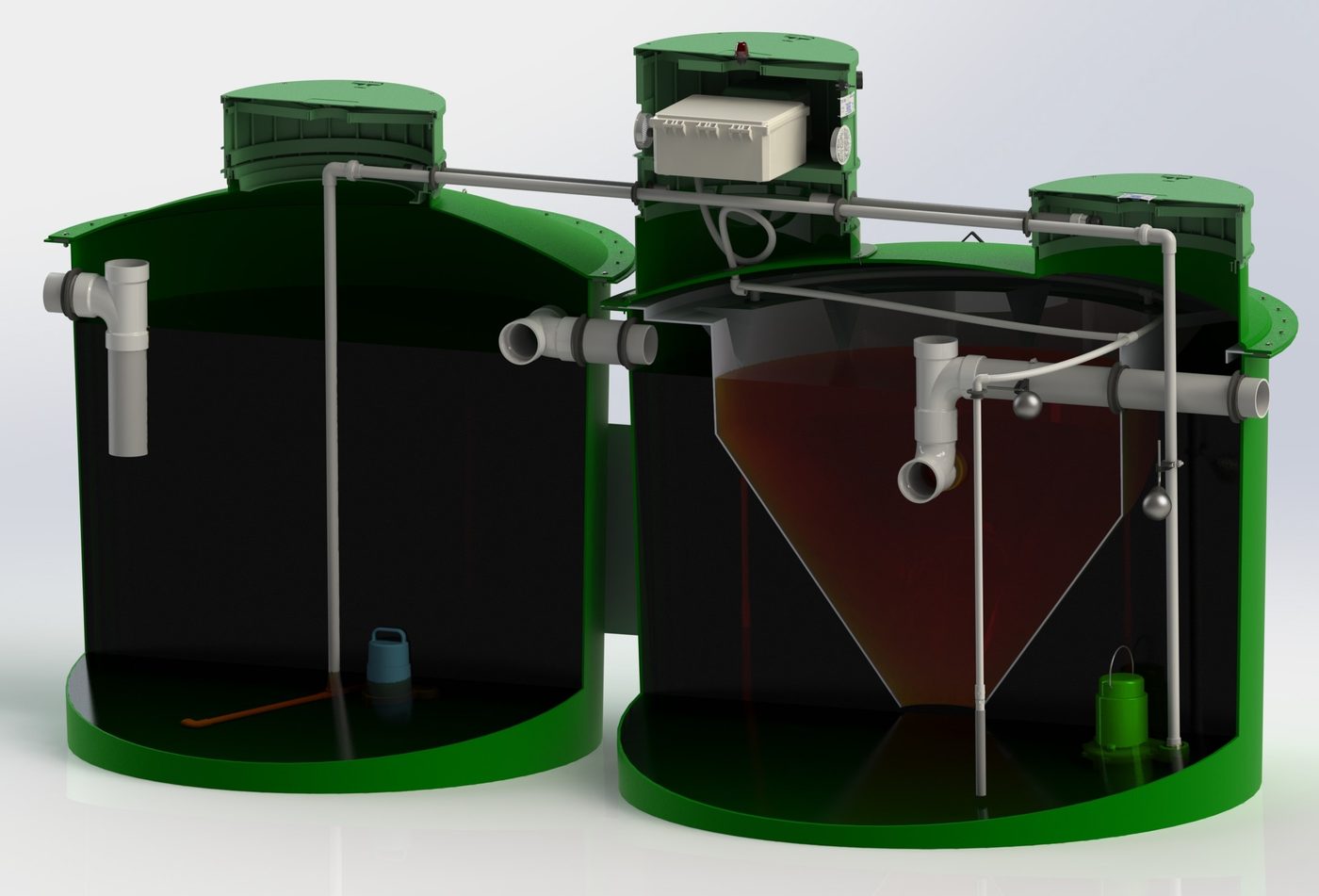
Nitrogen removal is a two-step biological process, and both steps have to happen in the right order.
Pretreatment and denitrification
Wastewater enters the pretreatment tank, where solids settle in a low-oxygen environment. Recirculated nitrate returning from the aerobic tank is converted here by bacteria into nitrogen gas, which vents harmlessly to atmosphere. This is where the nitrogen actually leaves the system.
Aeration and nitrification
Flow passes to the aerobic tank, where fine-bubble diffusers keep the mixed liquor oxygenated. Aerobic bacteria consume organic load and convert ammonia into nitrate. Nitrate-rich liquid is returned to the pretreatment tank to complete the cycle.
Clarification
Treated liquid enters the cone-shaped clarification compartment. Biomass settles and returns to aeration; clear effluent rises to the outlet tee.
Discharge or further treatment
Effluent leaves to the chosen dispersal method — drip, spray, pressure dosing or gravity. Where the permit calls for disinfection, UV or chlorination is added ahead of discharge.
The AN400, in 3D
Drag to spin it, pinch or scroll to zoom. Tap any part to see what it is — then hide it and look at what sits underneath. Peel the lids, the domes and the tanks away in any order.
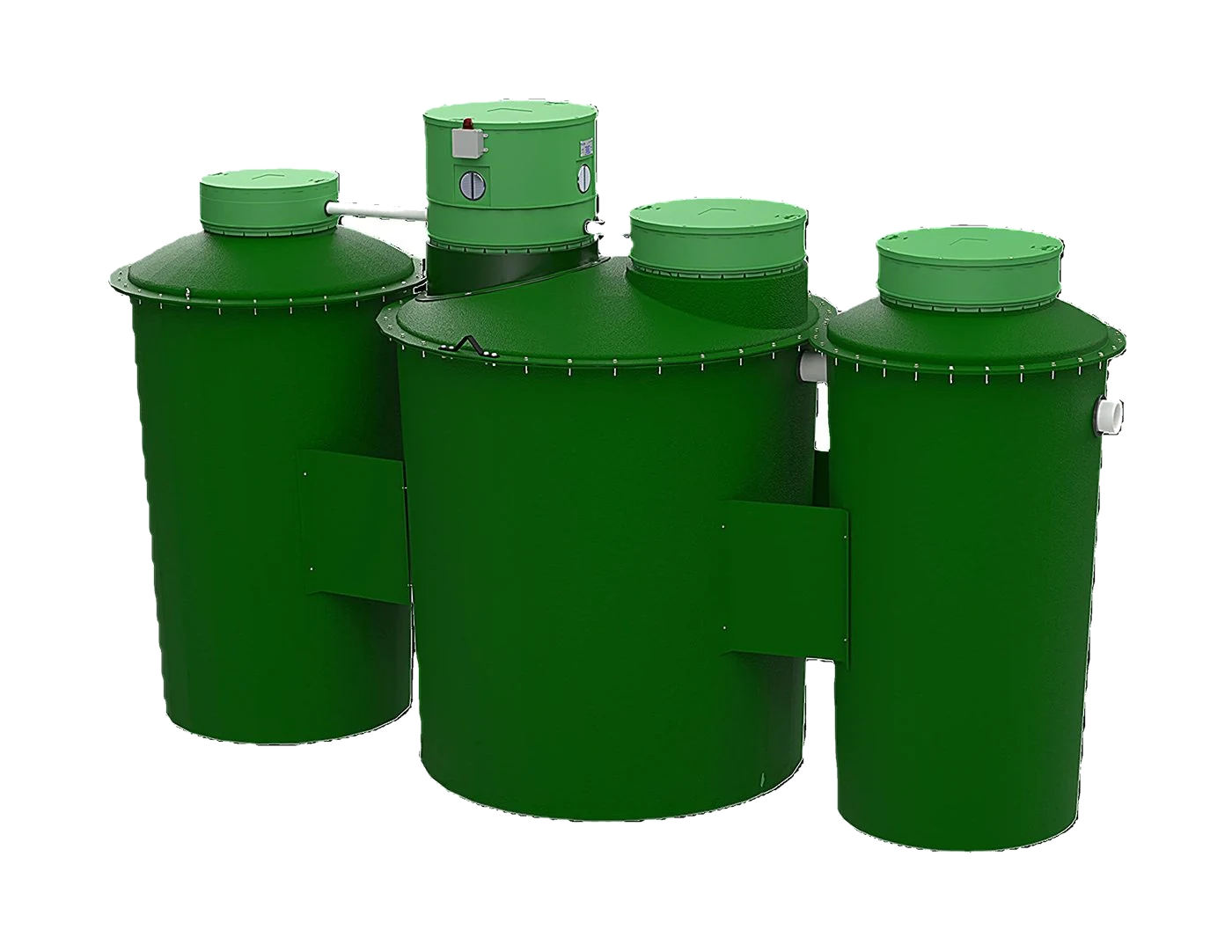
Hiding a part only changes this view — nothing is removed from the system. Fasteners, control panel and blower are left out of the model for clarity.
When the effluent has to be pumped
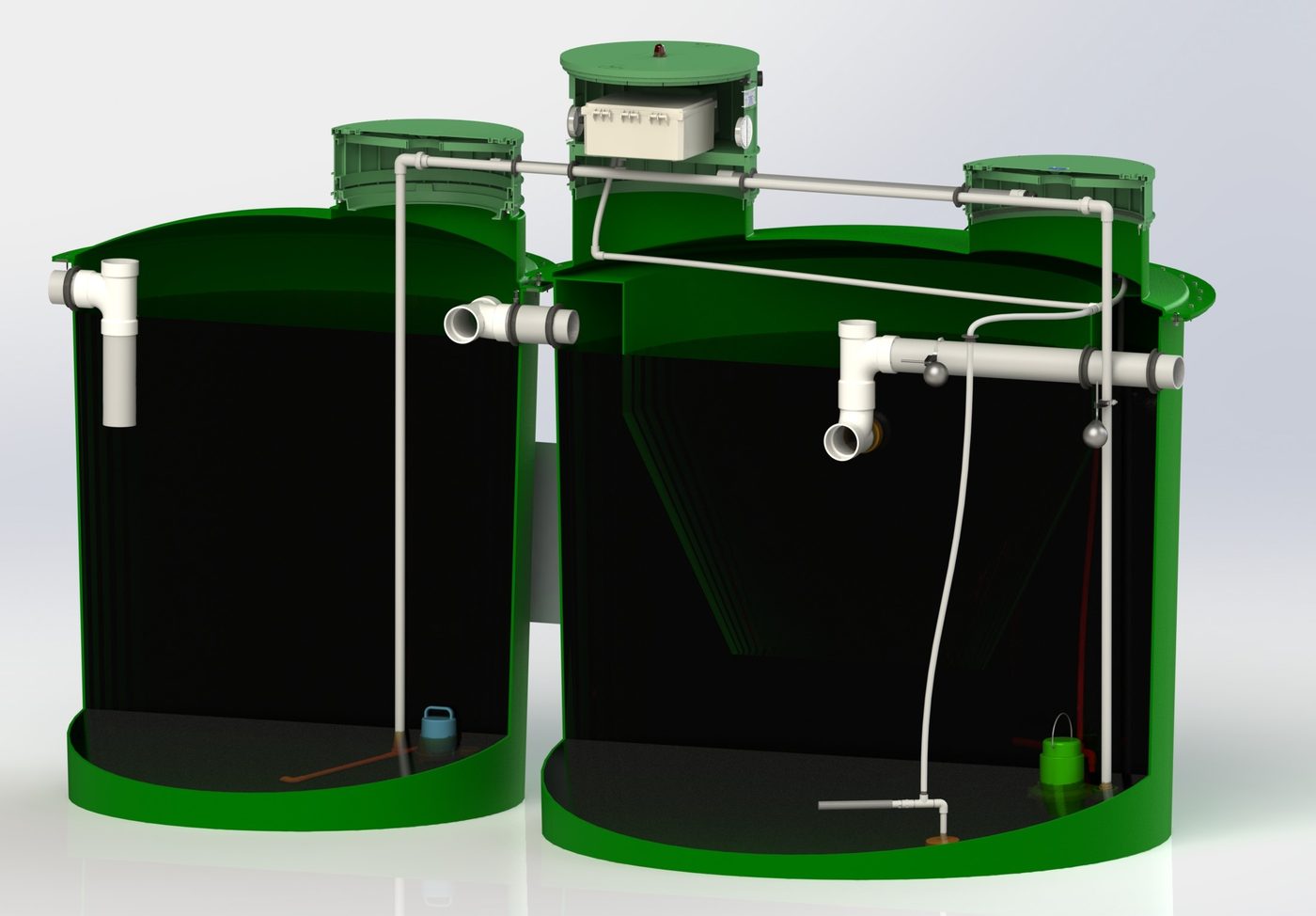
Gravity discharge is the simplest answer, but plenty of sites don’t offer it. Drip fields, spray irrigation, mounds and low-pressure dosing all need the effluent lifted and metered — which means a pump tank joins the pretreatment and aerobic tanks.
We integrate it the same way we integrate everything else: transfer plumbing run between all three vessels, pump and floats set, and the control panel programmed for the dosing regime before the unit leaves the yard.
- Pump sized to your head and flow from the design calculator
- Floats set for the variable storage volume the drainfield calls for
- Panel configured for timed dosing, demand dosing, or fail-safe operation
- Four large and four small side panels on a three-tank system
For shipped weight, take the two-tank figure from the table above, add the pump tank from the tank index, then add 14 lb for the extra panels. An AN500 with a PP500 pump tank works out at 1,078 lb dry.
Sections and arrangements
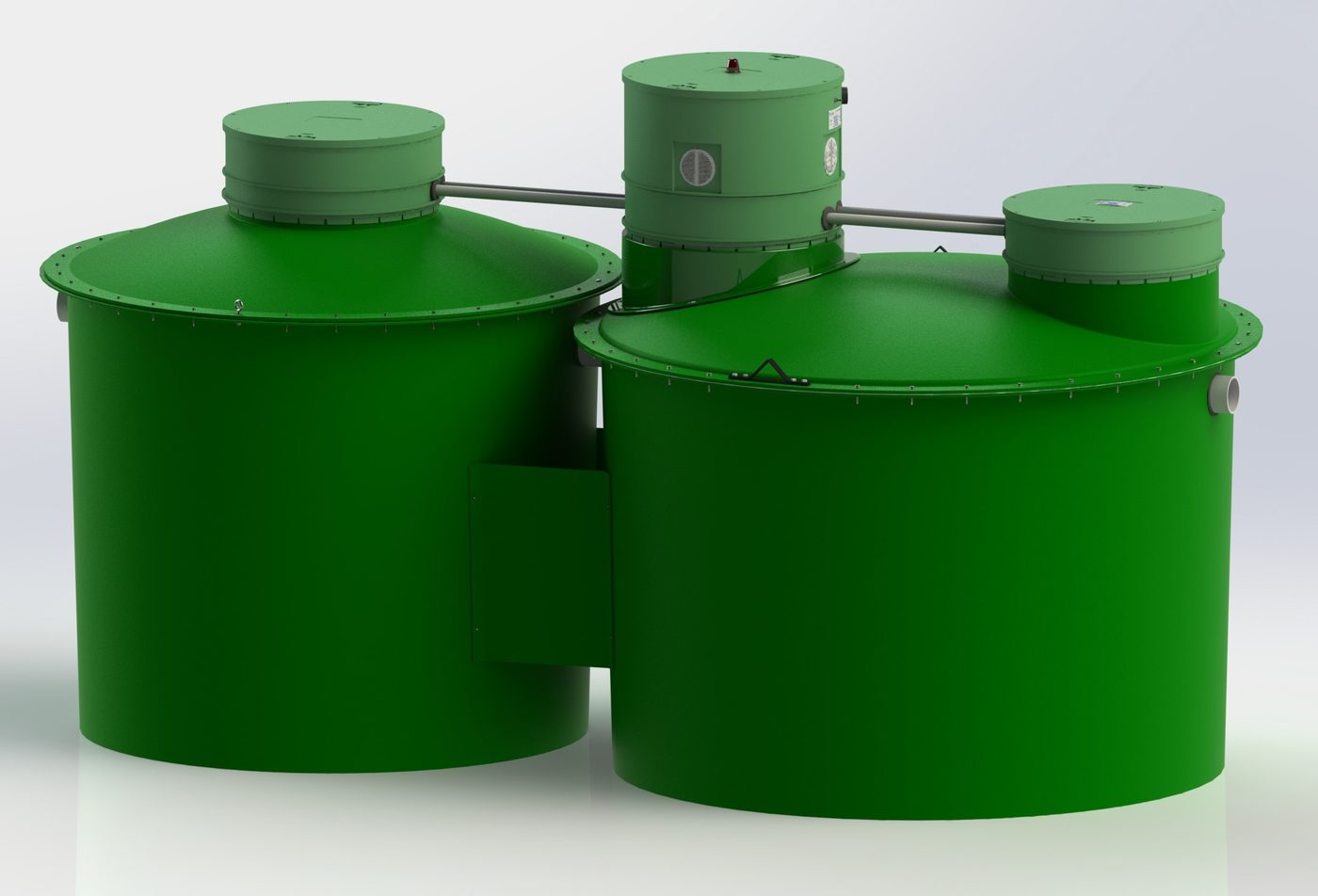
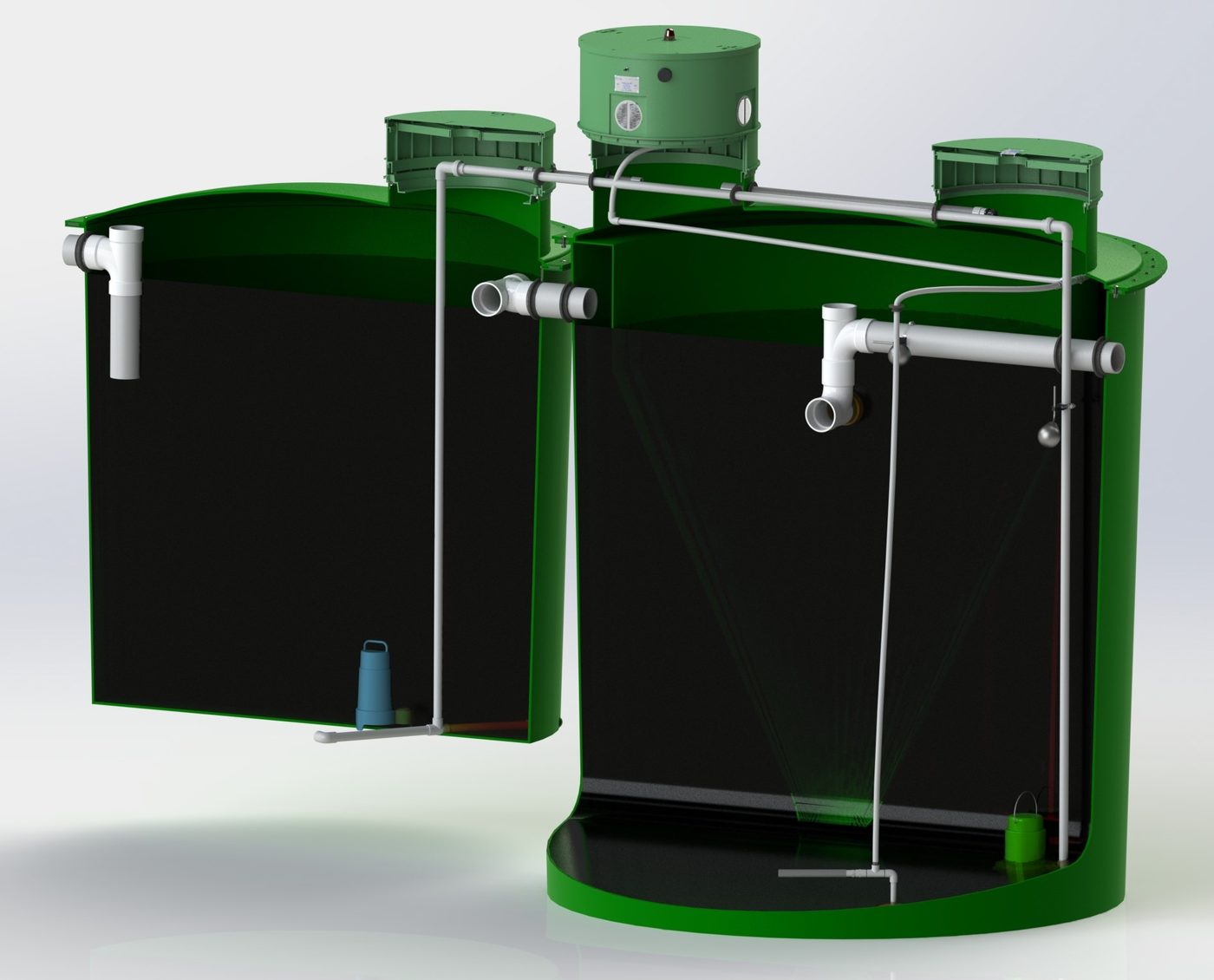
AN Series specifications
Two tanks per system. Figures come from the Hydro-Action Florida tank schedule and our own build sheets.
| Model | Rated flow | Pretreatment | Aerobic | Combined volume | Tallest tank | Largest dia. | Shipped weight |
|---|---|---|---|---|---|---|---|
| AN400 | 400 GPD | PP400 | PP800 | 1,183 gal | 80.75 in | 70.0 in | 627 lb |
| AN500 | 500 GPD | PP500 | PP1000 | 1,474 gal | 82.0 in | 76.0 in | 789 lb |
| AN600 | 600 GPD | PP750 | PP1200 | 1,887 gal | 80.38 in | 82.0 in | 905 lb |
| AN800 | 800 GPD | PP800 | PP1600 | 2,293 gal | 83.5 in | 95.0 in | 1,228 lb |
| AN1100 | 1,100 GPD | PP1200 | PP2200 | 3,073 gal | 104.0 in | 95.0 in | 1,520 lb |
Shipped weight is dry and covers both tanks, both domes, and the side panels. It excludes the blower, effluent pump, control panel, risers and lids, and any liquid. Adding a pump tank makes it a three-tank system — add that tank’s weight from the tank index plus 14 lb of additional panels.
What the AN Series is tested to

NSF/ANSI 245
Certified for total nitrogen reduction — a minimum 50% reduction across the test protocol.

NSF/ANSI 40, Class I
Also meets the Class I secondary treatment standard for CBOD₅, TSS and pH.

UL 508A
Panels are built and listed to the UL Solutions industrial control panel standard. See control panels
Spec sheets & drawings
Engineering packages and spec pages for the AN Series.
Send us the permit conditions
Tell us the daily flow, the county, whether you’re in a BMAP or springs protection area, and your burial depth and water table. We’ll come back with a model, a buoyancy check, a price and a lead time.
- Rated flow
- 400 – 1,100 GPD
- Certification
- NSF/ANSI 245 & 40
- Configuration
- Pretreatment + aerobic
- Tank material
- Glass fiber-reinforced polyester
- Riser
- Polylok 24 in
- Inlet / outlet
- 4 in Sch 40 PVC
- Gasket
- ASTM C923
- Built in
- Mims, Florida
AN Series at a glance